
PROGRAM : URBAN PLAN
LOCATION : NASHVILLE, TN, USA
SIZE : 75 acres
YEAR : 2012
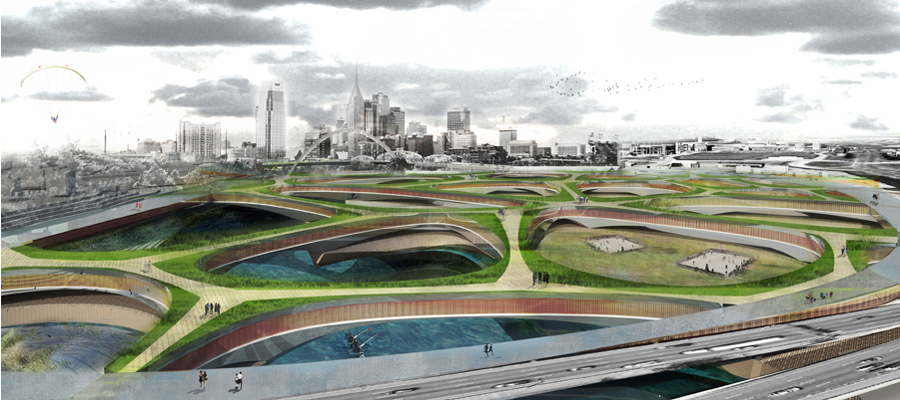
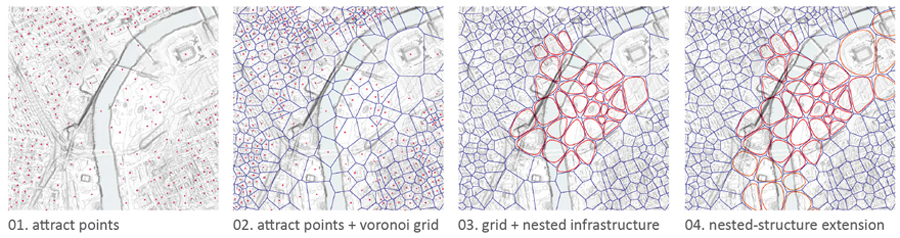
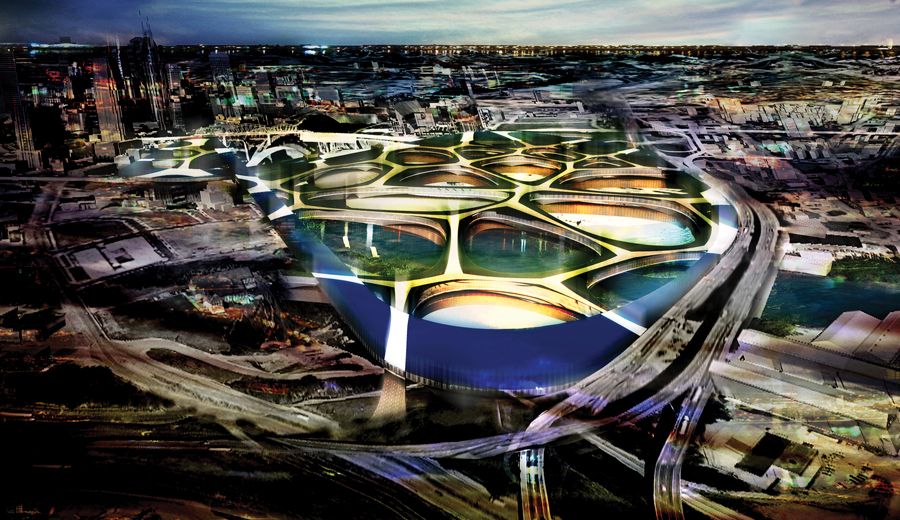
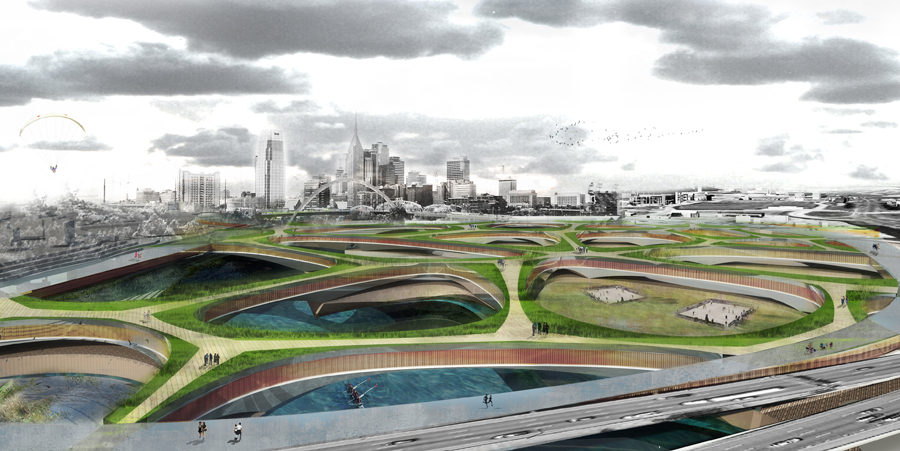
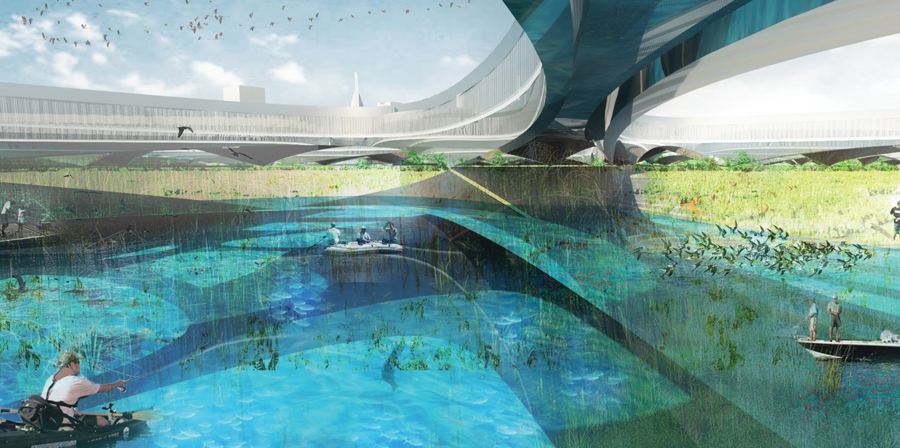
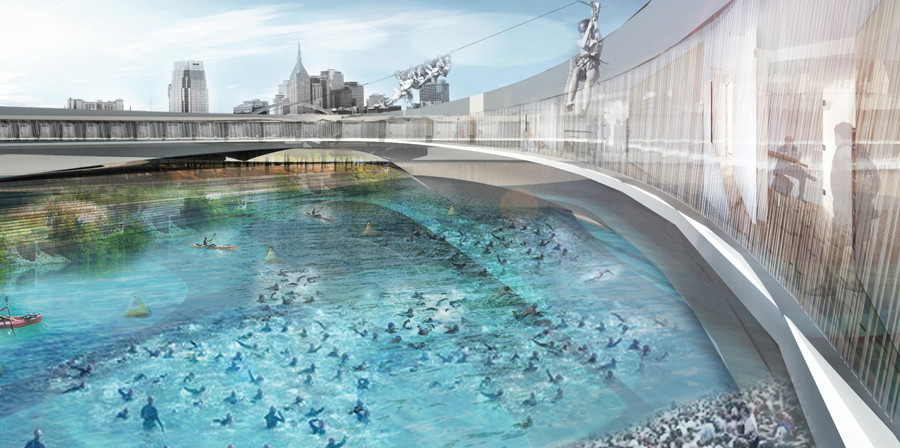
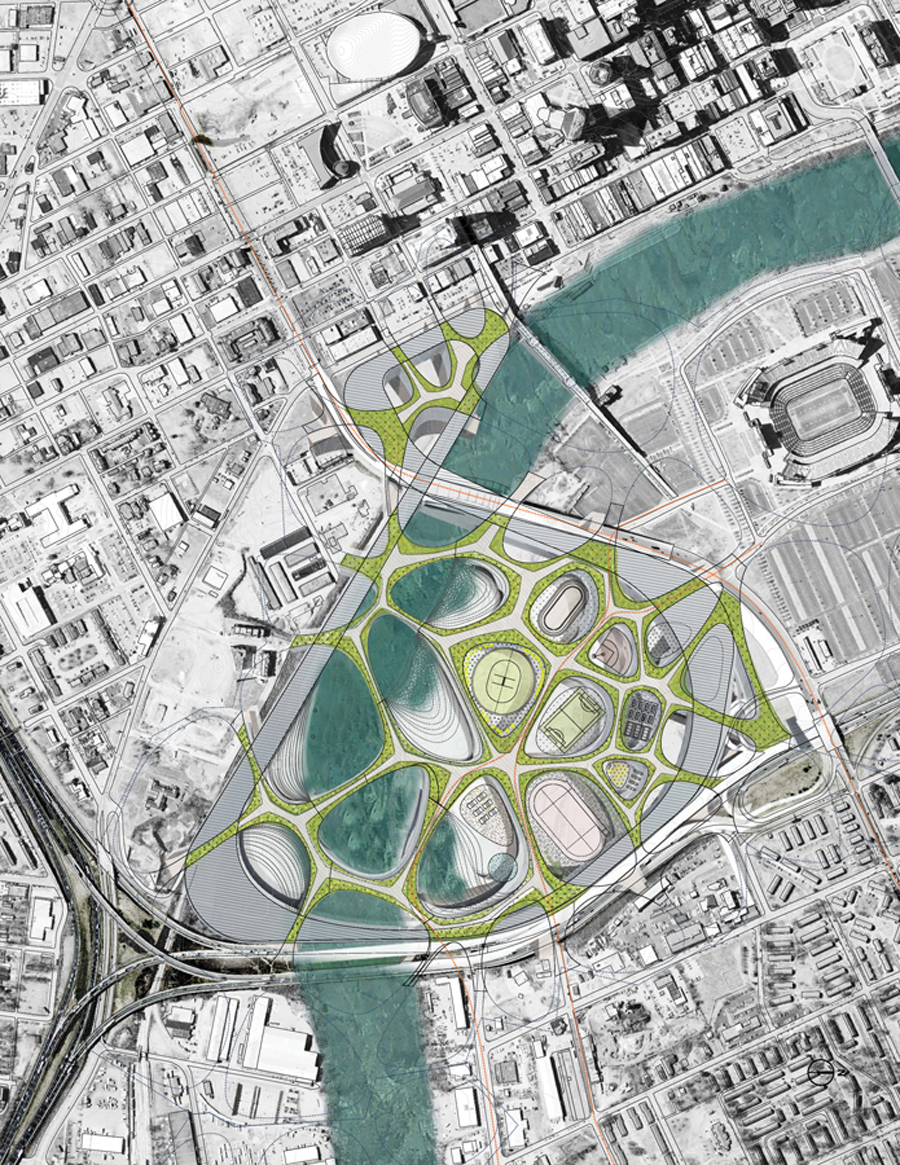
Poro-C(s)ity is flexible and adaptable infrastructure providing multiple ground. It is integrated system with water controlling facilities, housing and its supporting programs as well as sports fields, and complex public programs within the circulating butterfly like band structure. The project is developed base on voronoi grid system which is highly flexible compared to the conventional rigid grid. The system interacts with the existing rigid grid and building blocks and provides elevated new ground for future development in response to the population growth and urban density. By combining hard and soft infrastructure within the one hybrid mega-structure, it controls various ecological problems resulted from global climate change, rising current and flooding.
DESIGN ELEMENTS
BUTTERFLY LIKE BAND STRUCTURE
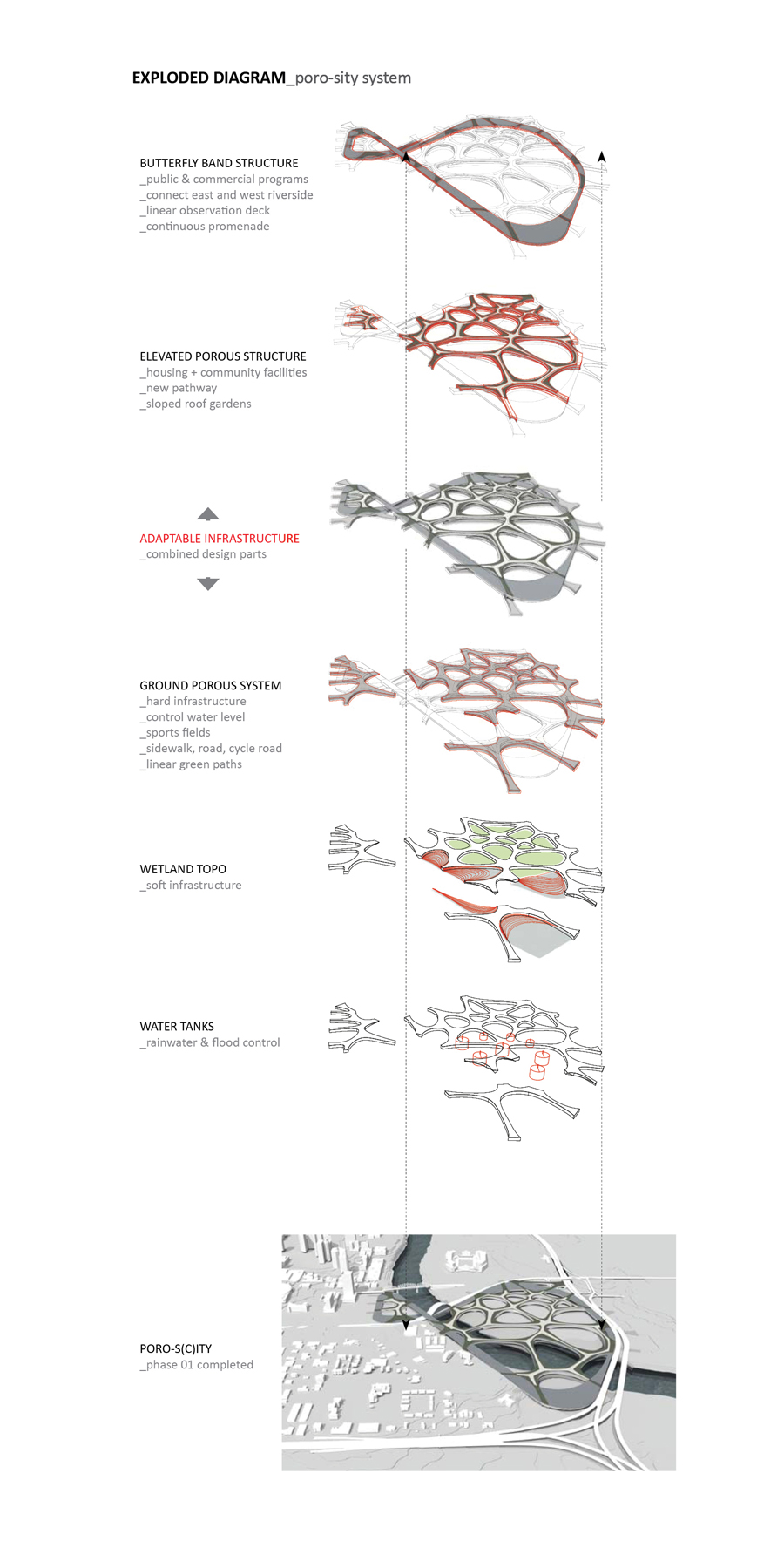
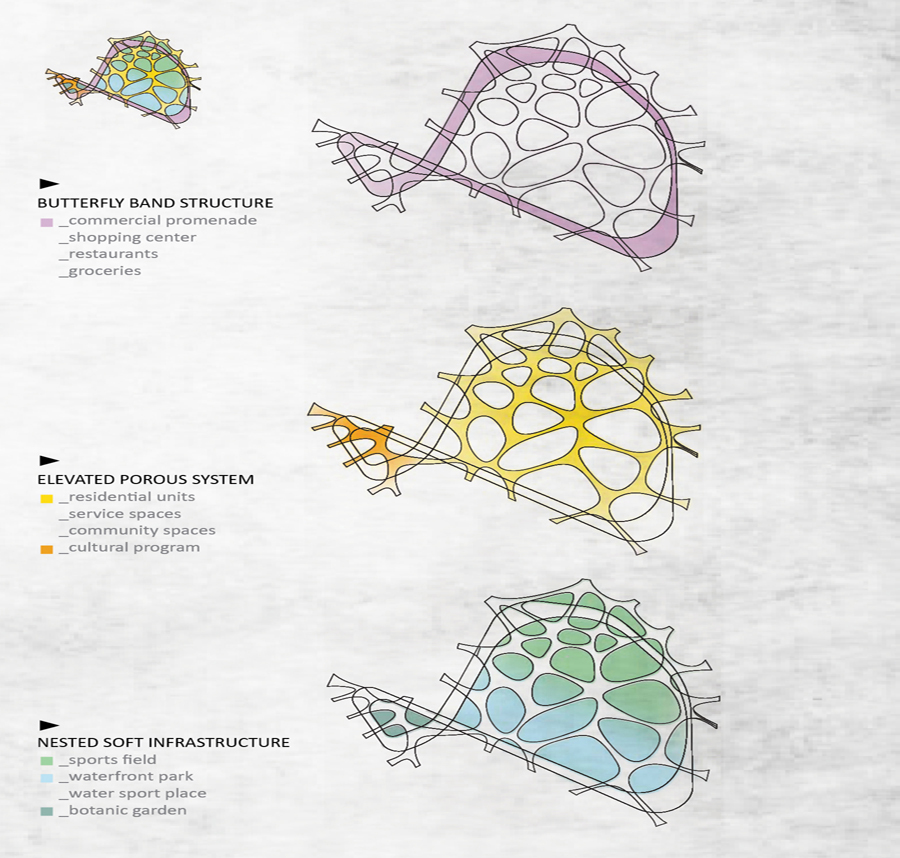
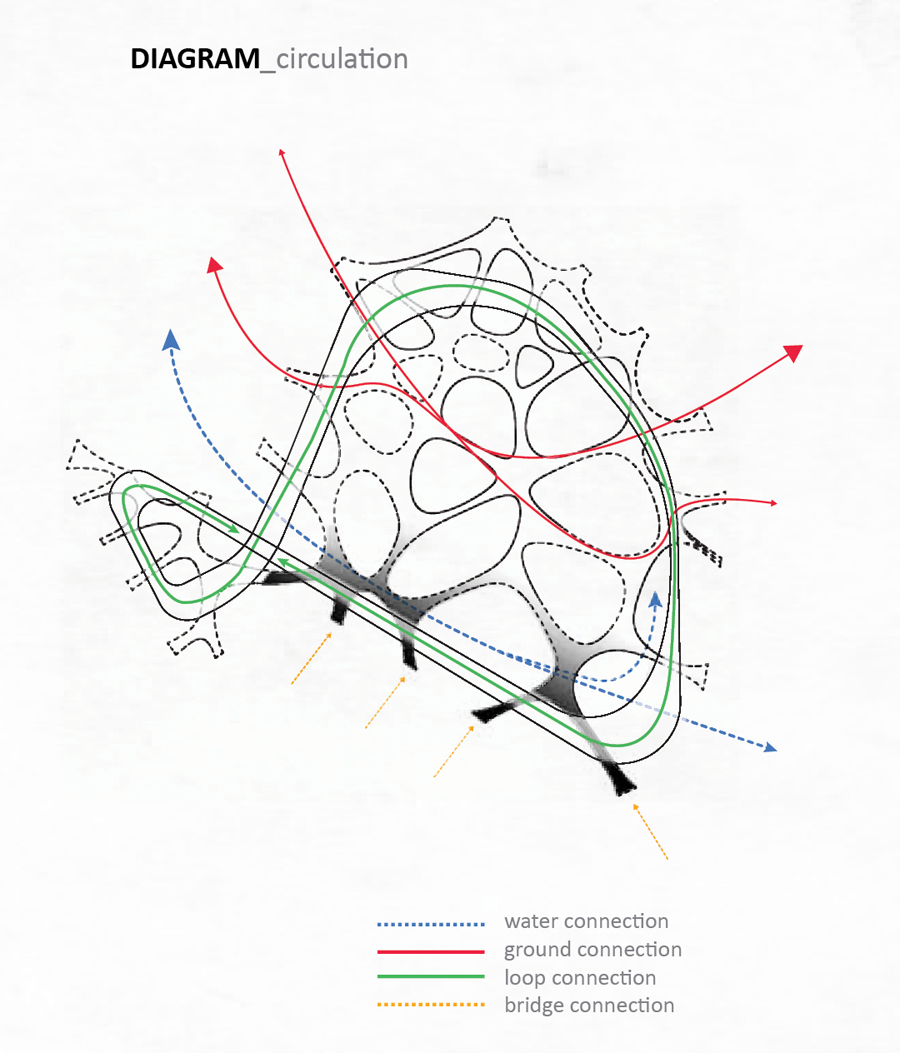
Linear band structure circulates around the site and provides continuous path. While moving along the existing urban infrastructure like highway, bridges, and interchange, it connects the site to the center city and the bank area and enhances connectivity throughout the site and its neighbor. There are residential supporting programs like shopping mall, retail stores, observation space and restaurants in this band structure.
ELEVATED POROUS INFRASTRUCTURE
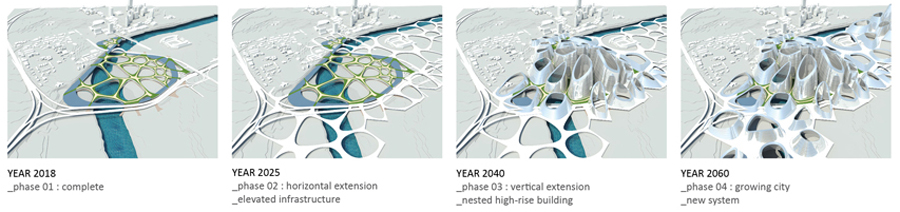
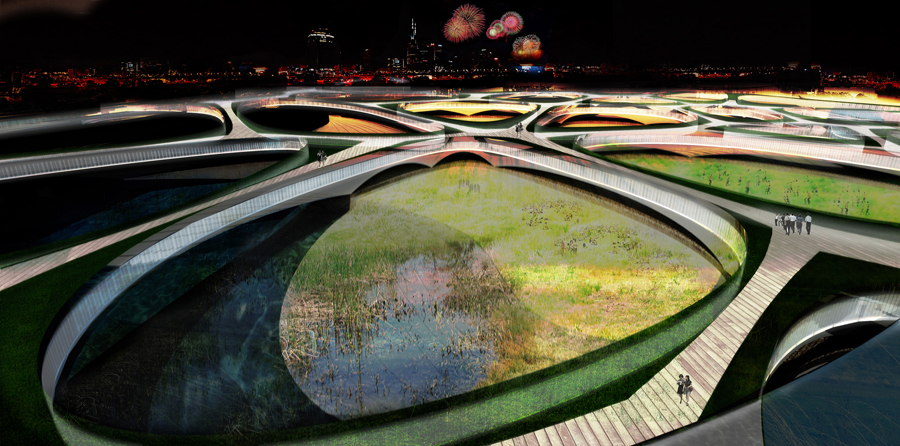
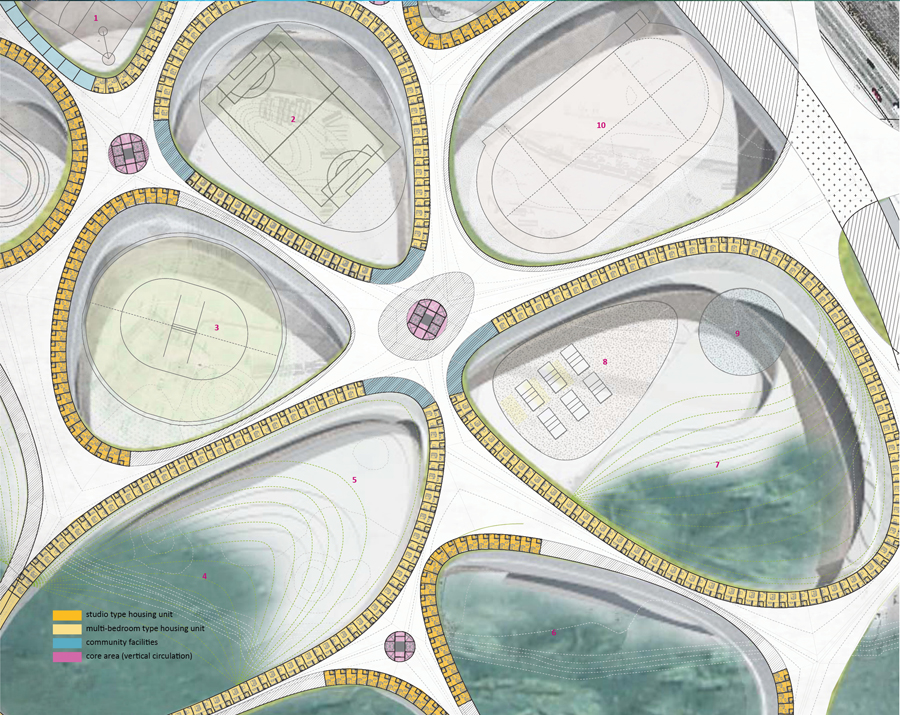
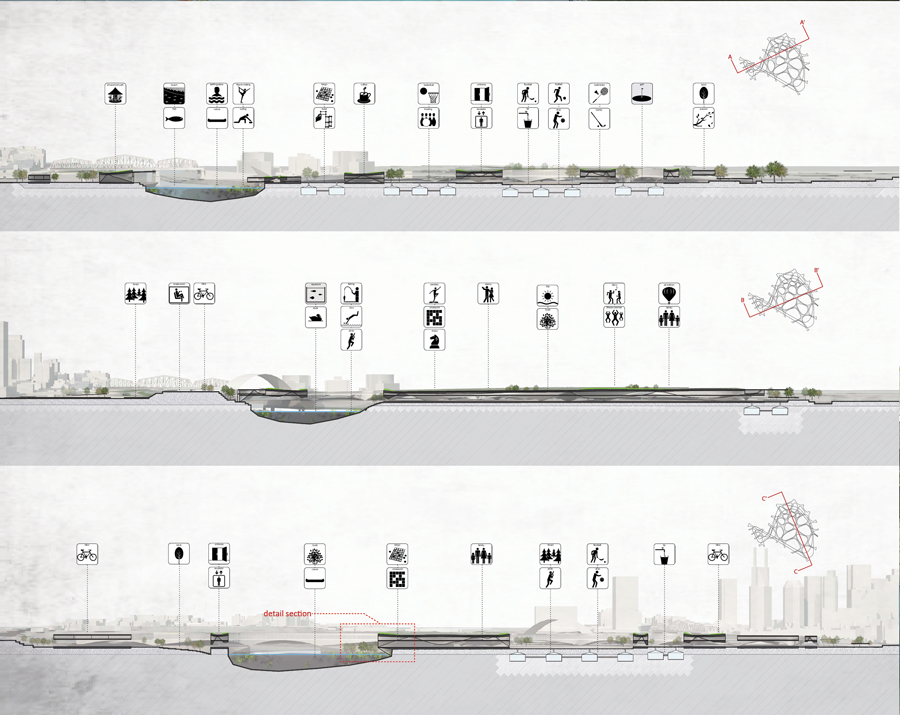
Elevated porous infrastructure creates meandering pedestrian path and it provides nested ring-like roof gardens. Sloped green roof collects rainwater into the central pipe under the roof and it is connected to underground water tanks. By adding this mega structure over the porous mass-system on the ground level, people can experience different movements and perspectives. There are housing and community facilities within the elevated porous structure. In terms of program, this elevated horizontal mega housing type will be a radical solution in response to the population growth in this city. People can access their housing from the roof level which provides dynamic views from the site to around area. Moreover, the roof garden provides new ground for future development as a elevated secondary ground for nested high-rise towers inside the elevated porous structure.
GROUND POROUS MASS-SYSTEM
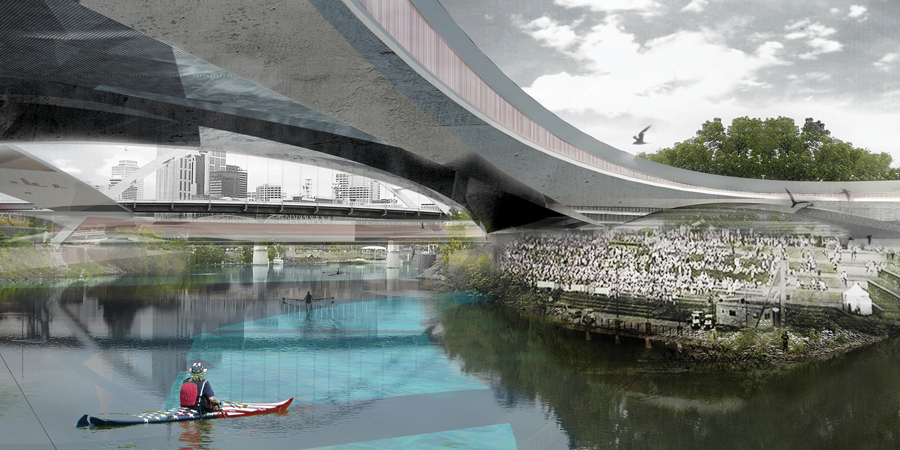
Conventional approach to solve the flooding issue is making hard infrastructure to protect the site from increasing water level. However, creating rigid hard infrastructure like concrete banks can damage ecology condition around the riverfront. Moreover, it rigidifies boundaries between land and water as well as between human and landscape. Current conditions on the water edge are only focused on reinforcing edge condition in order to prevent flooding, which resulted in forming a steep edge around the river bank.
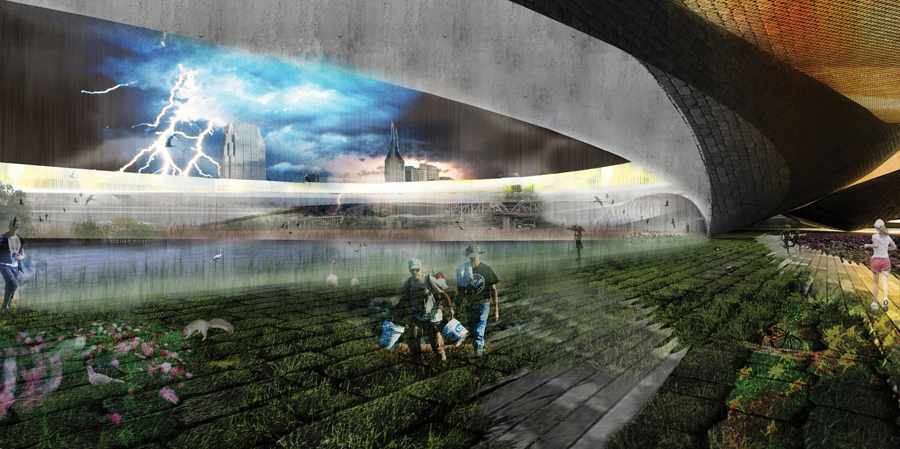
Our strategy is creating hybrid infrastructure which is combined hard infrastructure with soft infrastructure such as waterfront wetland. Porous mass-system on the ground level functions as a hard infrastructure for roads, cycle paths, sidewalk, and edge green paths. The green path on the edge purifies rain water as well as gray water from elevated programs like housing, and shopping mall. And the Porous mass-system is transformed into piers near the water front. It limits the water level and controls flood. Topography around water edge moves gradually toward the river to recover the relationship between people and water. Wetland is embedded between the pier structures as a soft infrastructure. Various sports fields like football field, cycle track, and running track are nested inside of the holes with different size. Water tanks which can reserve rain water and control flooding are installed under the sport fields.
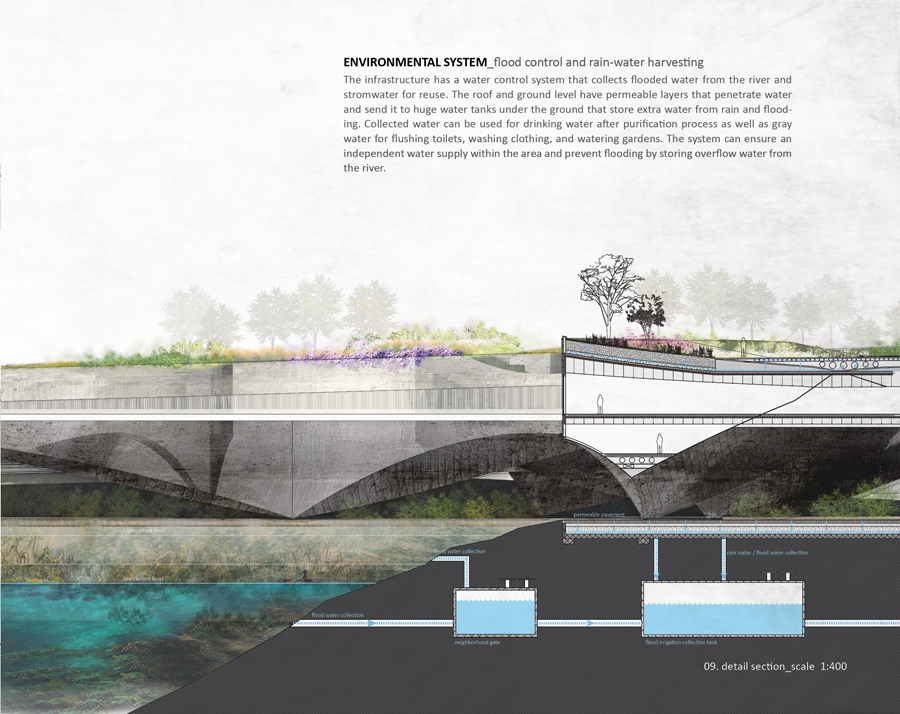
ENVIRONMENTAL SYSTEM_flood control and rain-water harvesting
The infrastructure has a water control system that collects flooded water from the river and stromwater for reuse. The roof and ground level have permeable layers that penetrate water and send it to huge water tanks under the ground that store extra water from rain and flooding. Collected water can be used for drinking water after purification process as well as gray water for flushing toilets, washing clothing, and watering gardens. The system can ensure an independent water supply within the area and prevent flooding by storing overflow water from the river.
 Studio M.U.Te.